
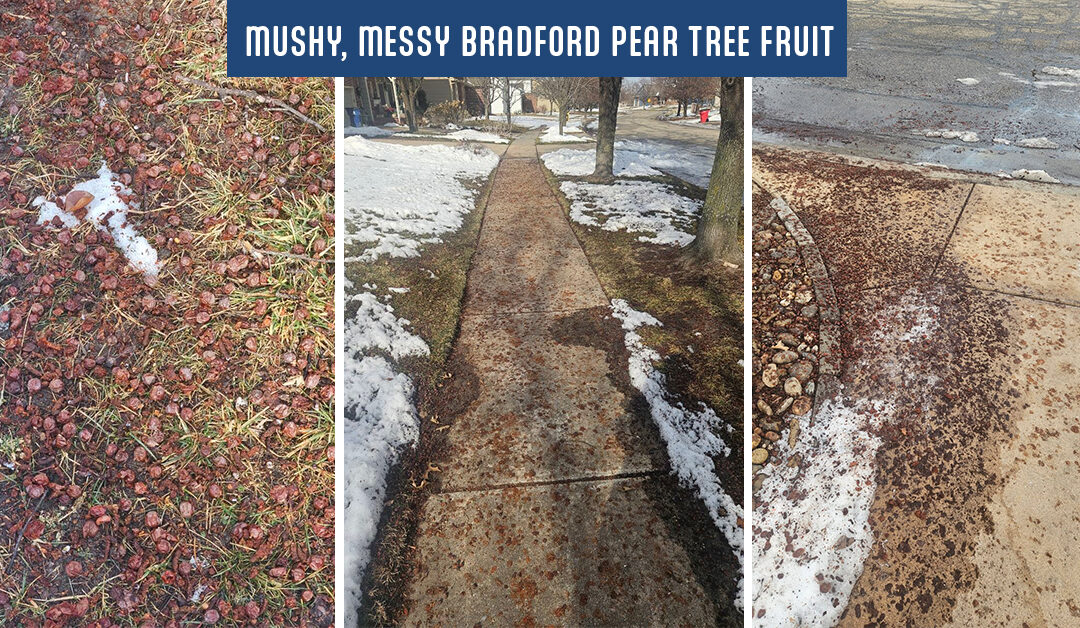
If you’ve stepped outside with our recent gorgeous weather only to discover your driveway or sidewalk covered in sticky brown goo that smells like last week’s compost bin then congratulations, you probably have a Bradford Pear tree nearby!
These trees (scientifically known as Callery pear, though nobody calls them that) are infamous in Kansas neighborhoods for their spectacular spring blooms, their weak limbs that don’t survive spring storms, and their unfortunate tendency to coat everything in sight with rotting fruit. Let’s break down what’s happening, what that brown mess actually is, and why now is the perfect time to clean up, and maybe even say goodbye to these stinky offenders.
What Are Those Brown Blobs, Anyway?
The “fruit” of a Bradford Pear tree starts out small, hard, and round, about the size of a marble. They’re a dull brown or black color, hanging harmlessly during summer and early fall. But once the temperatures drop, these berries soften and begin to rot. That’s when the fun (and funk) begins.
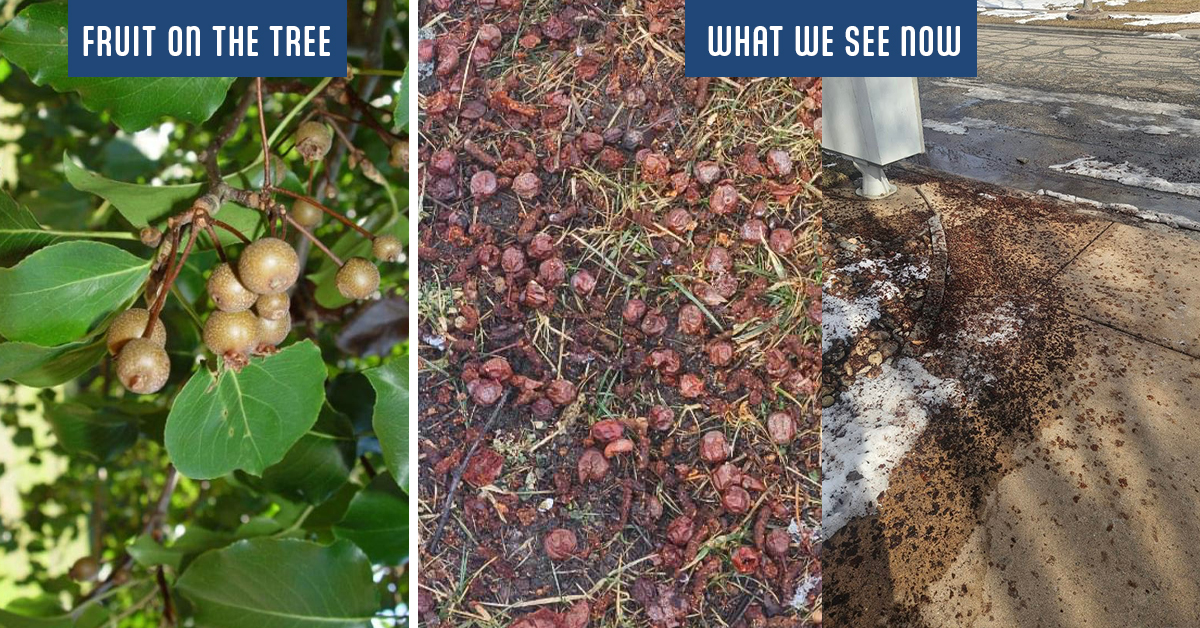
As the fruit decomposes, it creates a thick, mushy layer that sticks to shoes, cars, sidewalks, paws, and tires. Mix that with a bit of rain and freezing temperatures, and you’ve got a smelly, often slippery hazard zone on your hands. The smell? It’s a mix of sour fermentation and yard waste gone wrong, hardly the scent of a well-kept property.
How to Clean Up the Bradford Pear Mushy Fruit Mess
If your Bradford Pears are dropping rotten fruit right now, don’t wait for spring. The longer it sits, the more it attracts pests, stains driveways and sidewalks, and seeps into concrete pores. Here’s how to handle it safely and effectively this season:
- Rake and scoop first. Use a sturdy rake or shovel to collect as much fruit debris as possible before it fully breaks down.
- Power wash your hard surfaces. A standard pressure washer can remove leftover residue and prevent staining.
- Watch for mold and slick buildup. If black sooty mold forms (common after aphid activity), use a biodegradable detergent like Simple Green Oxy Solve or Charlie’s Soap Indoor & Outdoor Surface Cleaner to break down the sticky film.
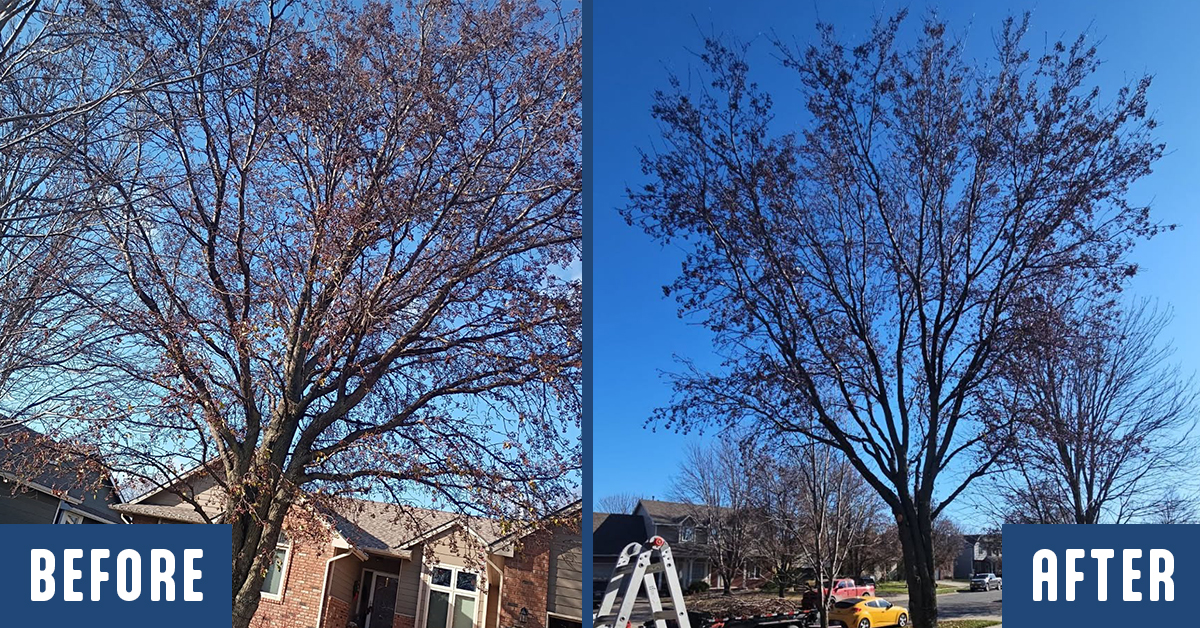
- Schedule tree pruning or removal. February is an excellent time to trim or take down nuisance trees since they’re dormant and easier to manage before spring storms arrive. – UPDATE: Please note that Greenbelt Lawns no longer offers tree removal and only light tree trimming. We can still look at your Bradford Pear and recommend next steps, though, so please don’t hesitate to reach out!
But Wait, There’s More…The Other Problems Bradford Pears Bring
While the fruit mess is their most obvious offense this time of year, Bradford Pear Trees are basically a “how-not-to” manual for urban trees:
- Weak, brittle branches. Their narrow branch angles make them notorious for splitting in high winds or under ice. One spring thunderstorm can turn a pear tree into a yard-wide debris pile.
- Invasive roots. Their root systems lift sidewalks, crack driveways, and even invade plumbing lines, an expensive surprise for homeowners.
- Unpleasant spring odor. We all see the white blossoms on the trees and think, “Oh how pretty!” But once those white flowers bloom, the tree gives off a smell that’s often compared to… well, let’s just say it clears a room. Your sentiments can go from “Pretty!” to “Yuck!” in a single sniff!
- Fungal and pest issues. From orange dust caused by cedar-quince rust to sticky honeydew from aphids, these trees are basically a nonstop maintenance cycle.
Learn more about the Bradford Pear problem. This isn’t the first time we’ve discussed the issues that Bradford Pear Trees cause. Learn more in our post, Invasive and Odorous: The Bradford Pear Problem.

Why Now Is the Perfect Time To Remove Bradford Pears
We get it, no one likes the idea of taking down a tree. But when a tree causes more chaos than shade or even oxygen, for that matter, it’s time to rethink things. Winter is the best season to schedule a Bradford Pear removal or heavy pruning before storms hit. Removing them now prevents property damage before limbs inevitably fail, and it opens space to plant a hardier native tree in the fall that looks better, smells better, and actually benefits local wildlife. Discover a host of great trees to consider planting in the Fall in our previous post, Fall is the Prime Time to Plant Trees in Wichita.
Final Thought: They Stink. We Don’t.
Bradford Pears may be pretty… briefly… in the Spring, but they are a major nuisance to native trees and landscapes. It’s time to move on. The mushy mess, the invasive roots, the funky smell, none of it is worth the headache. Let us handle the cleanup, tree trimming, or full removal so you can look forward to spring without sticky sidewalks or foul air.
Text Greenbelt Lawns 316-285-0562 today to schedule your Bradford Pear cleanup and help you determine the best possible next steps. Get it done before spring storms strike and enjoy a fresher, cleaner, less smelly, tree-limb-free season ahead.